DIGITAL TWIN PROJECTION LAYER
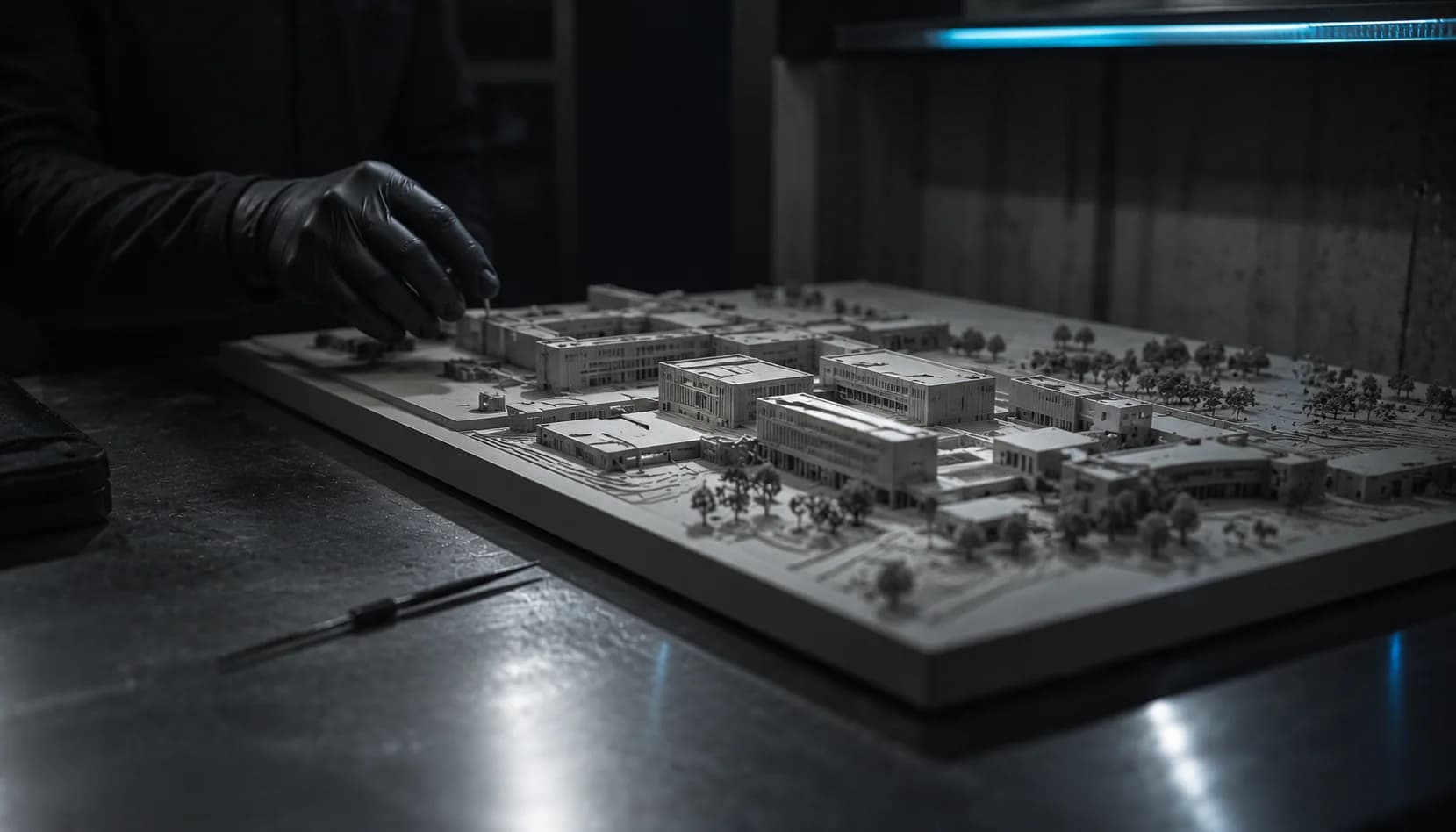
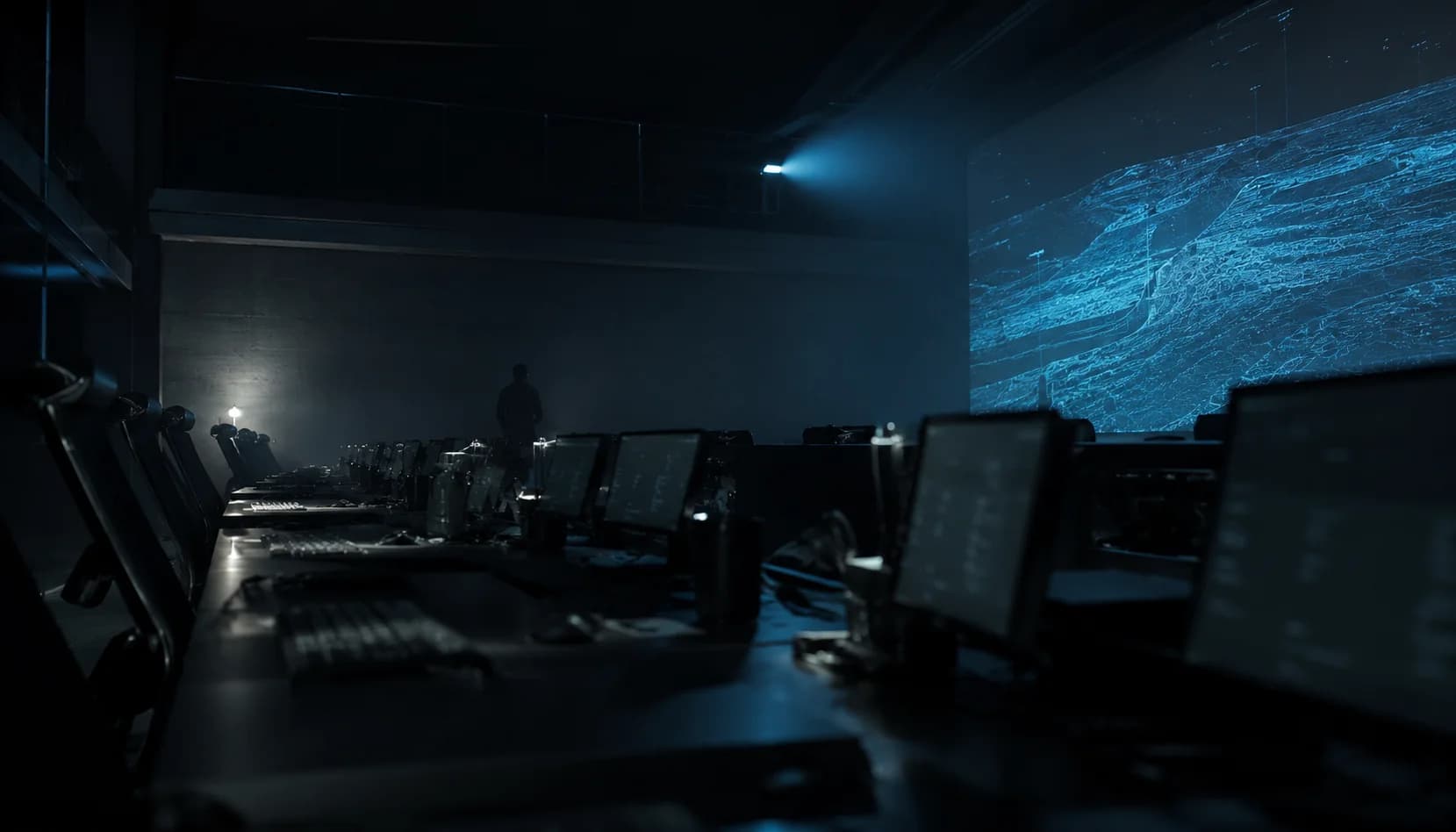
The Digital Twin Projection Layer is the operational environment in which INPSN’s spatial cognition becomes actionable command intelligence. INPSN converts continuous frequency-mesh perception into a measurement-accurate, navigable 3D/360° model of the client’s premises, ensuring that every operational decision is grounded in legally verifiable spatial truth rather than interpretive or camera-dependent representation. This projection layer is not a visual imitation of the premises; it is an authoritative spatial reference, constructed from sanctioned architectural drawings, registered area plans, and validated dimensional surveys, forming an institutional-grade operational baseline for safety, governance, audit, and evidentiary functions.
Across this environment, all motion-based perception, posture flow, trajectory evolution, object disturbances, congestion zones, stagnation states, and environmental anomaly signatures, is reconstructed as non-biometric geometric motion intelligence. Colours, shapes, and semantic states within the twin exist only as command-comprehension encodings and do not reconstruct human visual identity. The result is a privacy-preserving operational domain that expresses behaviour, movement, and environmental change with scientific precision, without compromising individual anonymity.
Live 3D/360° spatial intelligence updates continuously as the frequency mesh reports micro-burst distortions across space. These distortions are processed through INPSN’s reconstruction pipeline and projected into the digital twin as real-time geometric forms, enabling command units to observe environmental activity as it unfolds. Every posture transition, deviation from mapped movement corridors, or emergence of crowd pressure signatures is rendered inside the twin as an actionable operational signal. The digital twin therefore functions as the convergence surface where perception, cognition, and command fuse into a single institutional control layer.
Its purpose extends beyond operational awareness. Because the twin is built on legally measured baselines, every recorded projection becomes an evidentiary-sound spatial record for post-incident analysis, internal audit, compliance reporting, and insurance validation. INPSN preserves time-indexed archival states of the twin, allowing retrospective 3D/360° reconstructions of any event, across any floor, from any viewpoint, with precise temporal fidelity.
Edge computation ensures that projection latency remains minimal, allowing the digital twin to reflect live spatial states with operational immediacy.
Through the NeuraLoop Intelligence Interface, leadership, supervisors, and authorized operators engage with this environment in a structured, hierarchical manner, observing dynamic states, issuing redeployment commands, verifying guard activity, resolving anomalies, and authorizing or overriding MYTHIC’s cognitive advisories. In effect, the Digital Twin Projection Layer transforms a physical estate into a live command-grade safety domain, governed by spatial intelligence rather than camera imagery or subjective interpretation.
Purpose of the Digital Twin as the Spatial Reference Environment
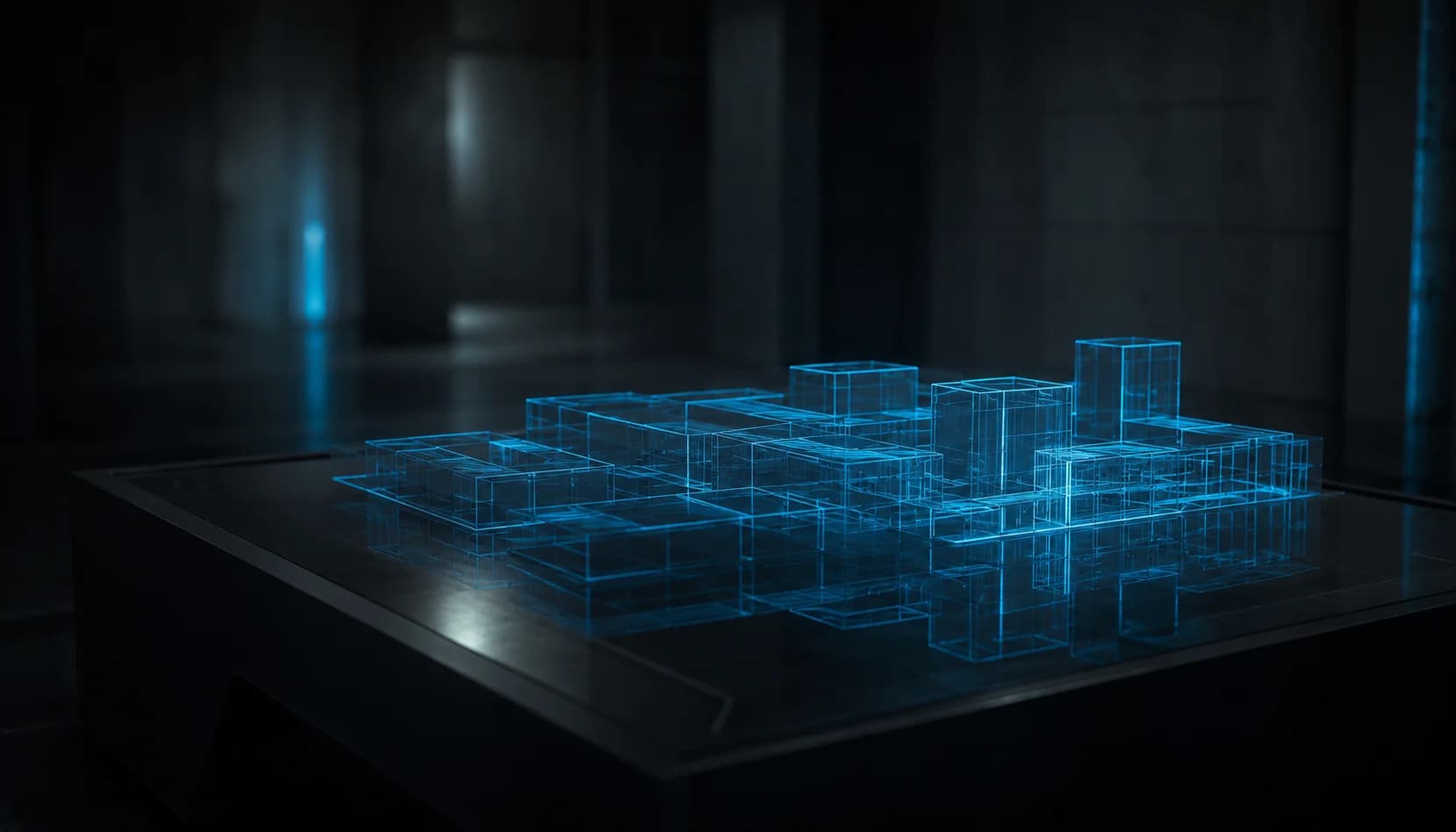
The Digital Twin Projection Layer forms the authoritative spatial environment within which INPSN interprets and contextualizes all live frequency-derived intelligence. It functions as the estate’s operational reference space, enabling every movement pattern, behavioural shift, anomaly signature, and environmental change to be understood in direct relation to the site’s actual architectural structure.
Across large estates, multi-floor complexes, and expansive campuses, this environment provides the spatial continuity required for lawful command oversight, operational decision-making, and investigatory clarity. It allows leadership to evaluate live conditions and historic events within an environment that corresponds precisely to the client’s verified architectural reality.
Formation of a Measurement-Accurate Architectural Model
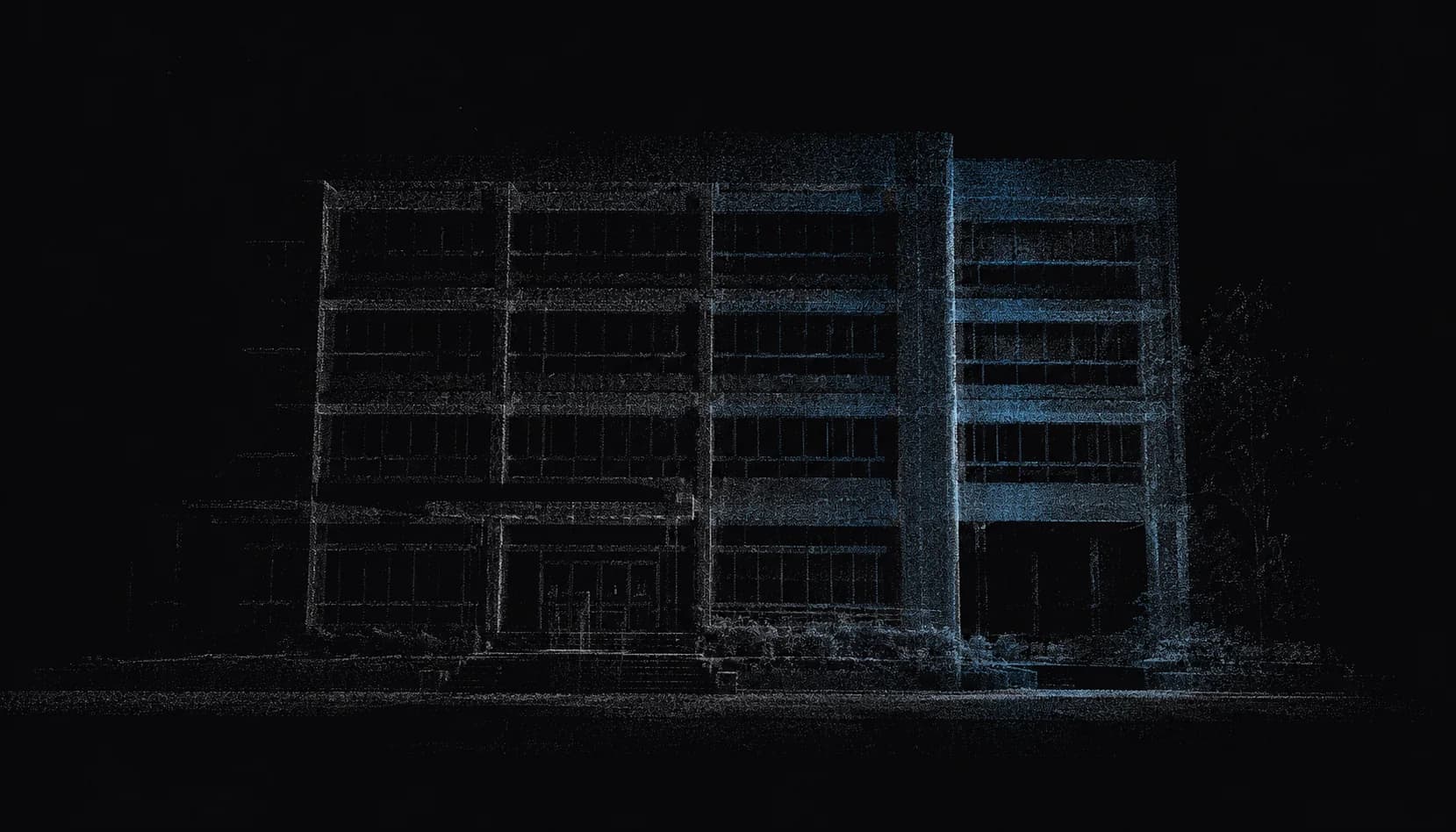
The digital twin is established from client-supplied architectural drawings, sanctioned layouts, structural plans, and verified dimensional surveys. These records are synthesized into an accurately scaled, volumetric reconstruction of the entire premises, including buildings, internal zones, corridors, stairways, vertical shafts, open areas, and perimeter regions.
This provides a stable architectural baseline that remains consistent across operations, audits, investigations, and insurance assessments. Every spatial interpretation performed by INPSN is anchored to this legally recognized structural framework, maintaining uniformity between real-world space and operational command evaluations.
Projection of Live Motion Intelligence into the Architectural Framework
INPSN’s frequency-based perception continuously identifies posture transitions, directional movement, crowd formation, object disturbances, and environmental signatures. These reconstructions are projected directly into the digital twin at precise spatial coordinates, enabling dynamic behaviour to be interpreted within the estate’s structural context.
Human and object forms are represented through non-biometric geometric constructs, designed to express movement, posture, and spatial interaction without revealing appearance or identity. Every projection is synchronized in real time, allowing the twin to become a continuously updated representation of the estate’s behavioural state.
Structural Permanence and Dynamic Spatial Activity
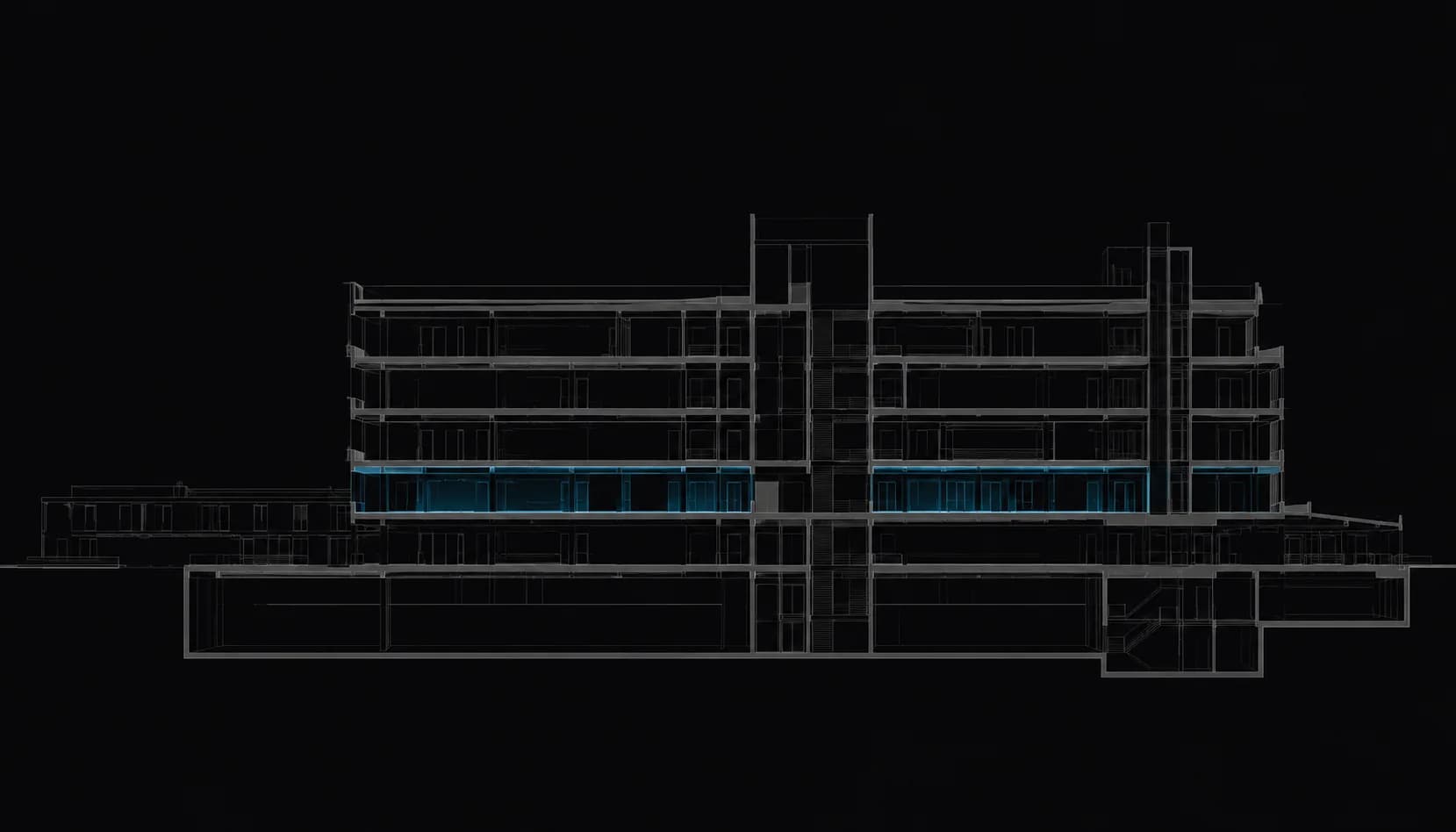
The digital twin maintains a clear separation between the fixed architectural structure and the dynamic activity occurring within it.
Permanent elements, walls, floors, fixtures, and sanctioned installations, form a stable reference layer. All motion forms, temporary obstructions, and environmental variations appear as dynamic overlays that interact with this structural baseline.
Any newly observed object or relocation of an existing asset is treated as an unclassified change until an authorized supervisor validates and registers it. This ensures that structural accuracy is preserved under controlled governance, with every modification logged for future verification.
Multi-Floor and Multi-Zone Spatial Comprehension
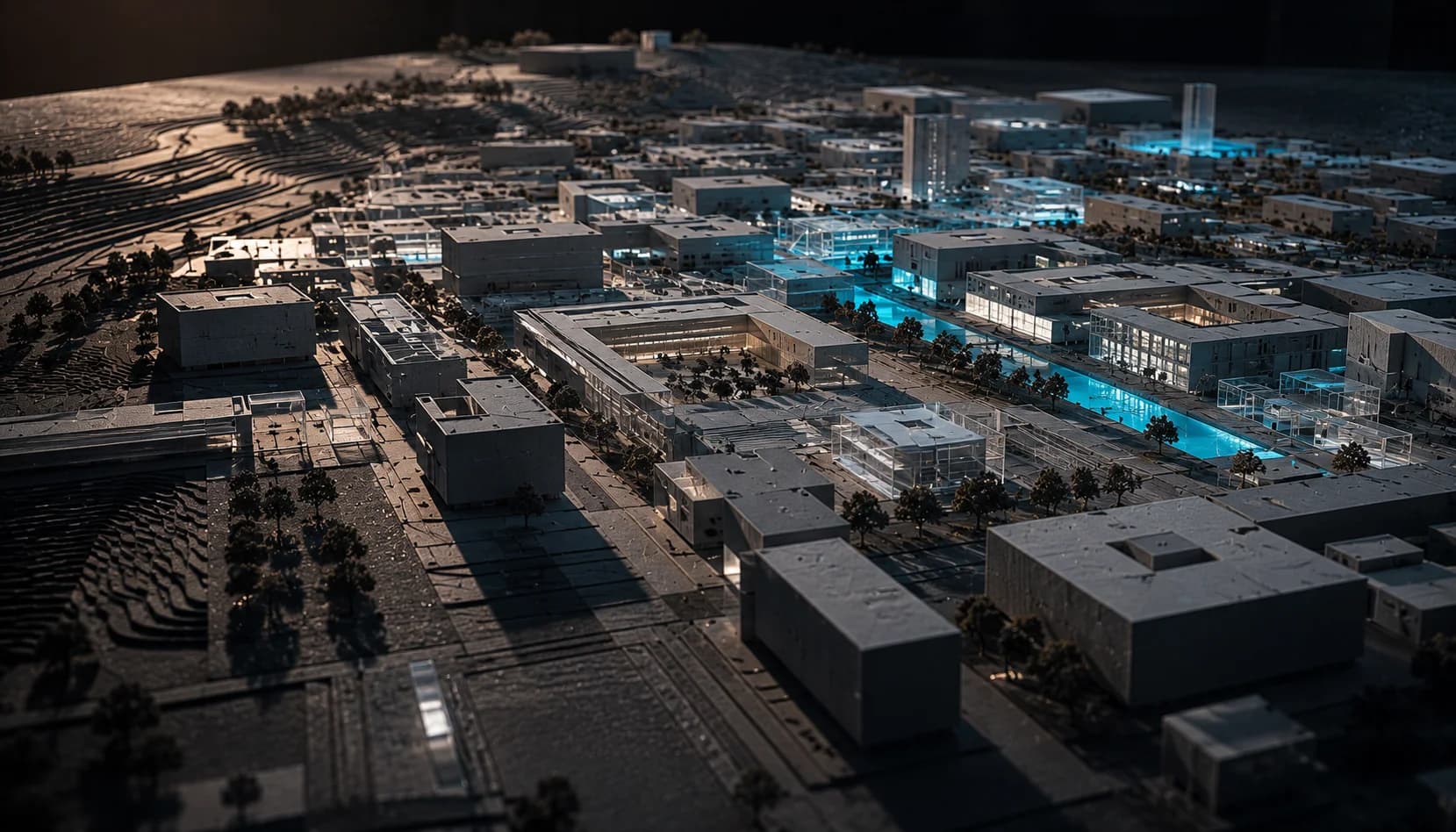
Complex estates require intelligence that operates across multiple levels, interconnected zones, and distributed buildings. The digital twin adapts to this need by providing multiple viewing modes, each designed for operational clarity.
Supervisors may examine isolated floors, full-building sectional views, vertical flow pathways, composite interiors, or unified multi-structure representations, depending on what the situation demands.
This creates a coherent spatial theatre in which movement behaviours and emerging anomalies can be understood seamlessly across architectural boundaries, improving predictive interpretation and enabling more precise command intervention.
Spatial Record Integrity and Investigatory Reconstruction
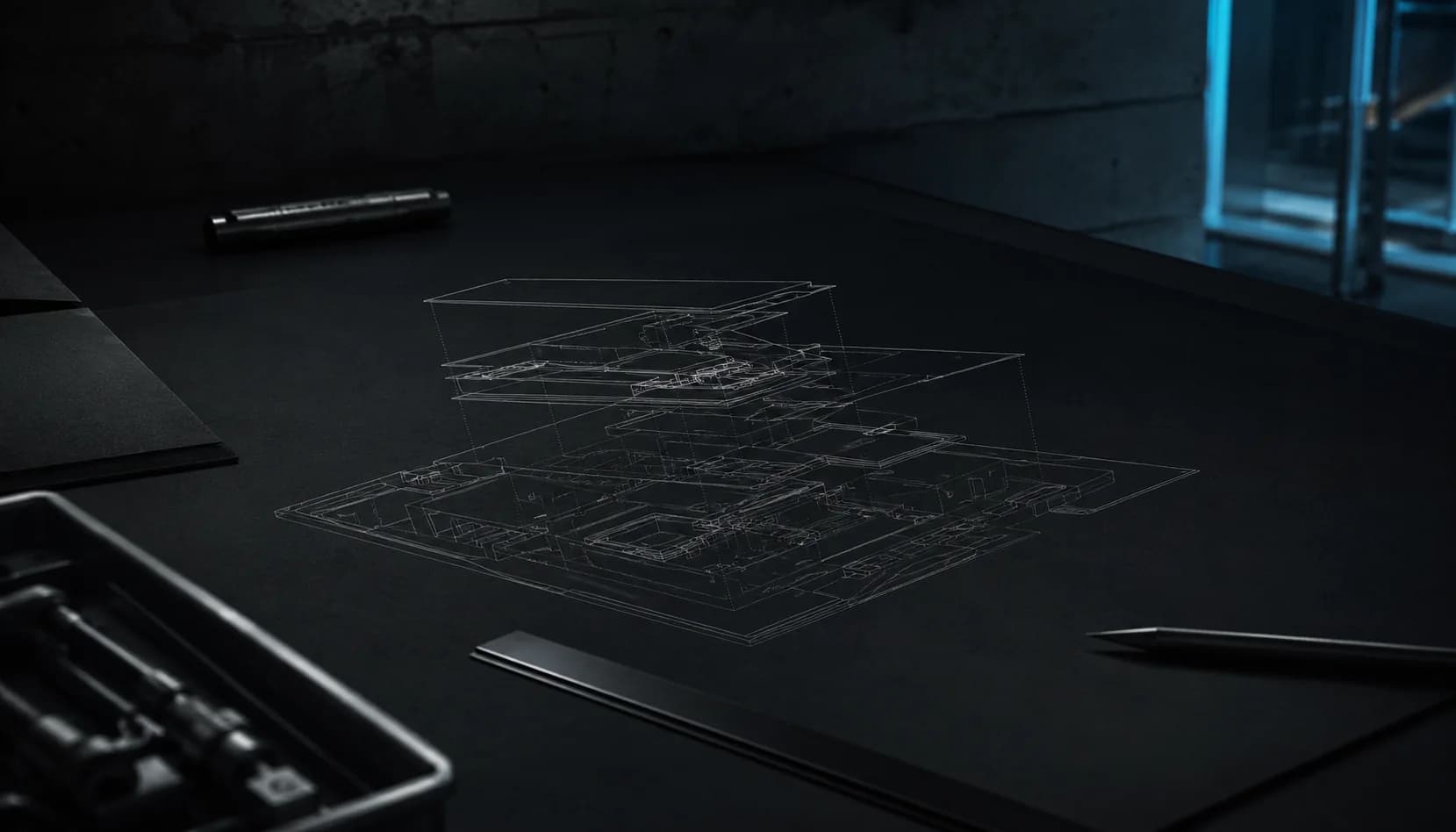
All spatial activity projected into the twin is time-indexed and archived, enabling retrospective reconstruction of events for operational review, insurance validation, and lawful investigations.
These reconstructions preserve the same modalities available during live operational review, 3D/360° spatial playback, sectional analysis, and environmental overlays, ensuring that investigators and leadership teams can revisit any moment within the estate’s verified architectural structure.
This structural consistency ensures that operational findings are based on a reliable spatial reference, independent of optical limitations and environmental obstructions.
Governance, Authorization, and Spatial Sovereignty
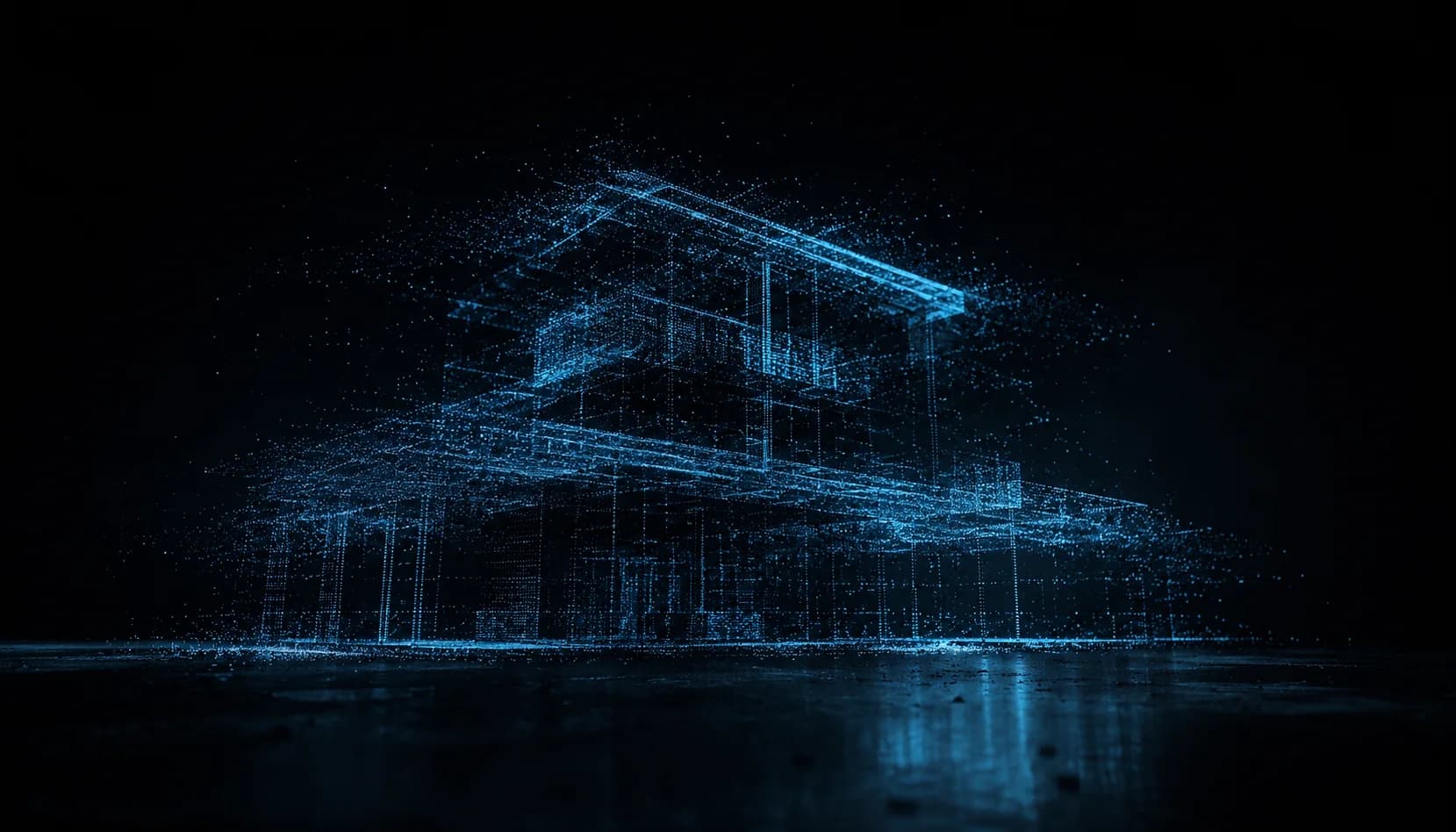
Control over the digital twin remains exclusively with the estate’s ownership authority. Structural modifications, reclassification of objects, creation of operational zones, or definition of restricted areas require explicit client authorization.
Supervisors may propose changes as part of on-ground operational management, but final approval rests solely with the client. No automated subsystem, including MYTHIC, may alter the architectural baseline or structural configuration independently.
This governance model ensures that the digital twin remains a sovereign spatial asset, compliant with legal, operational, and privacy standards across all deployment environments.
NDA-Restricted Engineering Detail
Certain engineering mechanisms underlying the projection layer, such as spatial interpolation logic, mesh arbitration processes, reconstruction coherency rules, structural boundary validation routines, and dynamic continuity estimation, are reserved for enterprise and institutional clients under NDA.
These disclosures enable technical due-diligence evaluation while safeguarding proprietary methodologies that form the foundation of INPSN’s spatial cognition capabilities.
This page describes system doctrine, operational intent, and safety governance. Technical parameters, implementation details, and operational thresholds are restricted and disclosed only under contractual NDA.