FREQUENCY MESH TOPOLOGY
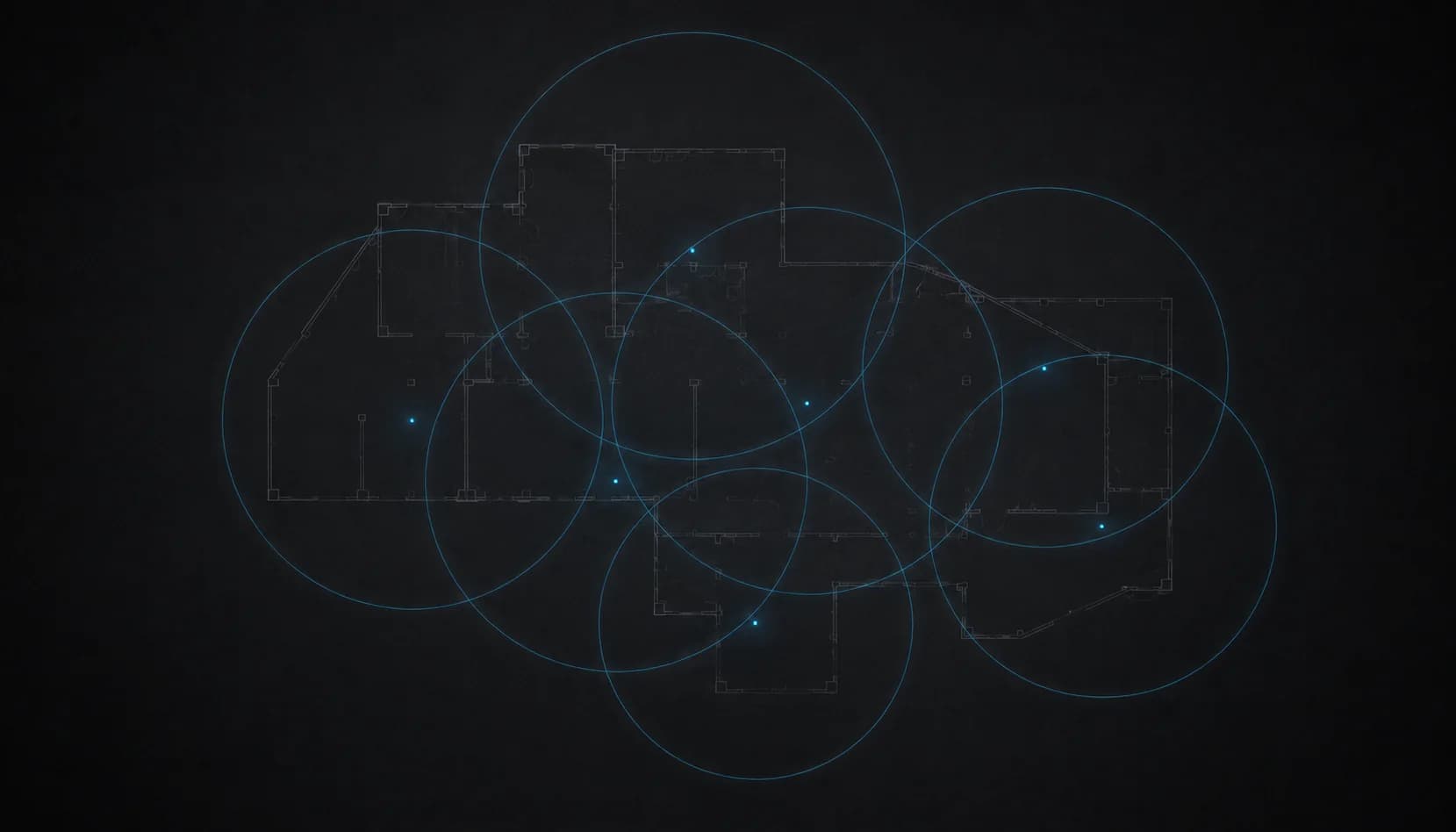
The operational foundation of INPSN’s spatial intelligence does not arise from single devices functioning independently, but from the federation of distributed Ultra-Wideband perception anchors into a unified, synchronized frequency mesh network.
This mesh topology constitutes the core perception field of INPSN, an active spatial lattice through which movement, density variations, posture transitions, and environmental anomalies are interpreted as three-dimensional motion geometries across entire protected estates.
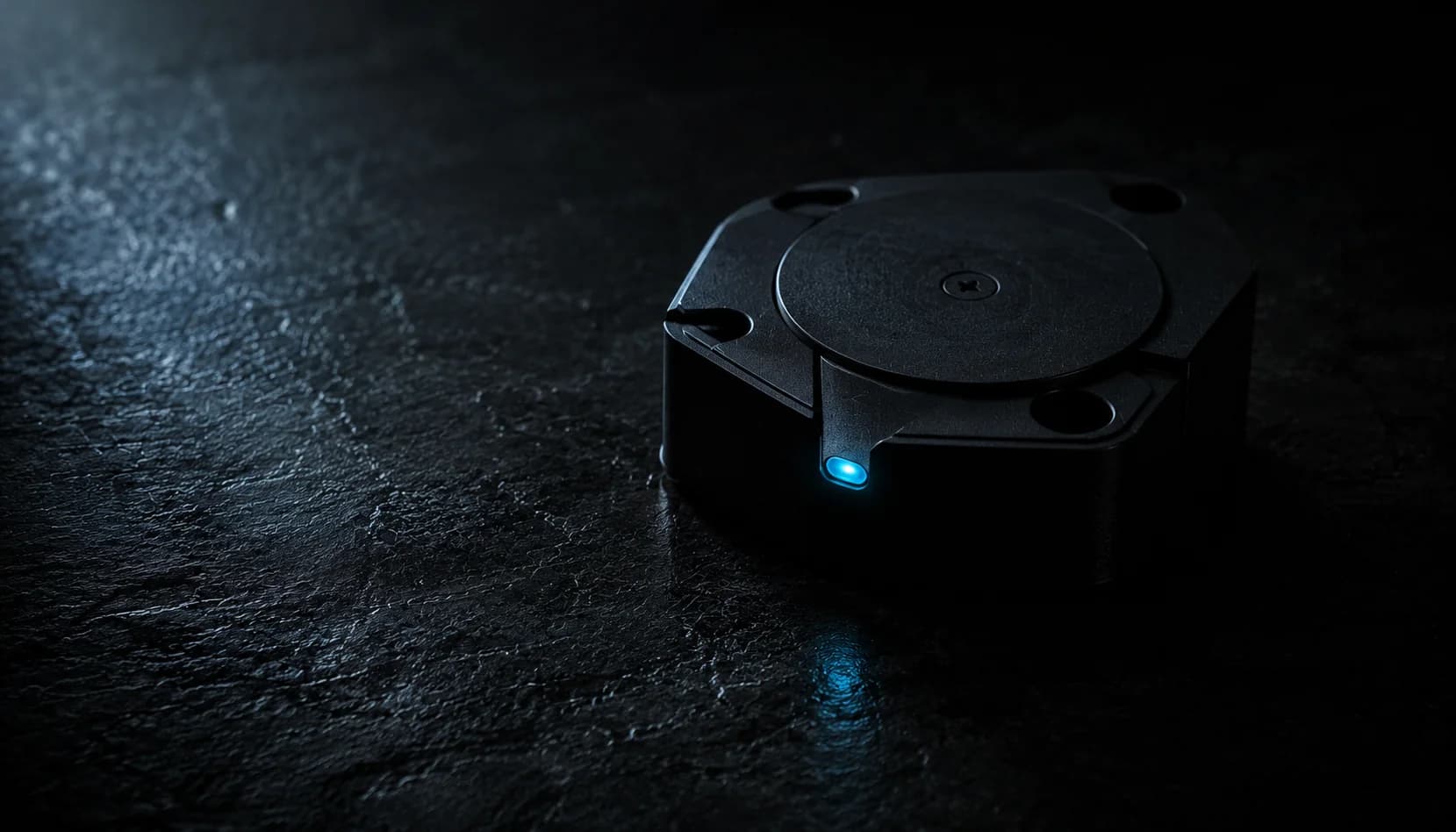
Each deployed anchor participates equally within the mesh fabric, functioning simultaneously as both transmission and reception nodes, and as cooperative reference points for multi-path spatial triangulation. Rather than operating through hub-based or centralized signaling architectures, the mesh is structured as a fully distributed perception system, wherein every node validates spatial interpretations through continuous peer correlation.
This architecture ensures real-time perceptual continuity across:
- Multi-floor interior environments
- Large single-structure facilities
- Exterior perimeter zones
- Transit corridors and connecting pathways
- Distributed multi-building campuses
No single anchor governs the network. No central detection dependency exists. Spatial perception instead arises from coordinated cooperative frequency interaction across overlapping grid planes.

Grid Geometry Formation
INPSN deployment begins with the orchestration of spatial grid planes formed by strategically positioned UWB anchors across architectural environments.
These grids are not arranged by arbitrary spacing formulas or consumer wireless coverage assumptions; rather, they are aligned to the dimensional realities of structural geometry. Building layouts, ceiling surfaces, passage widths, atrium voids, perimeter contours, stairwells, elevator shafts, and open-air transition corridors define where grid continuity is required. Anchor placement follows architectural composition to preserve uninterrupted volumetric perception fields across navigable areas.
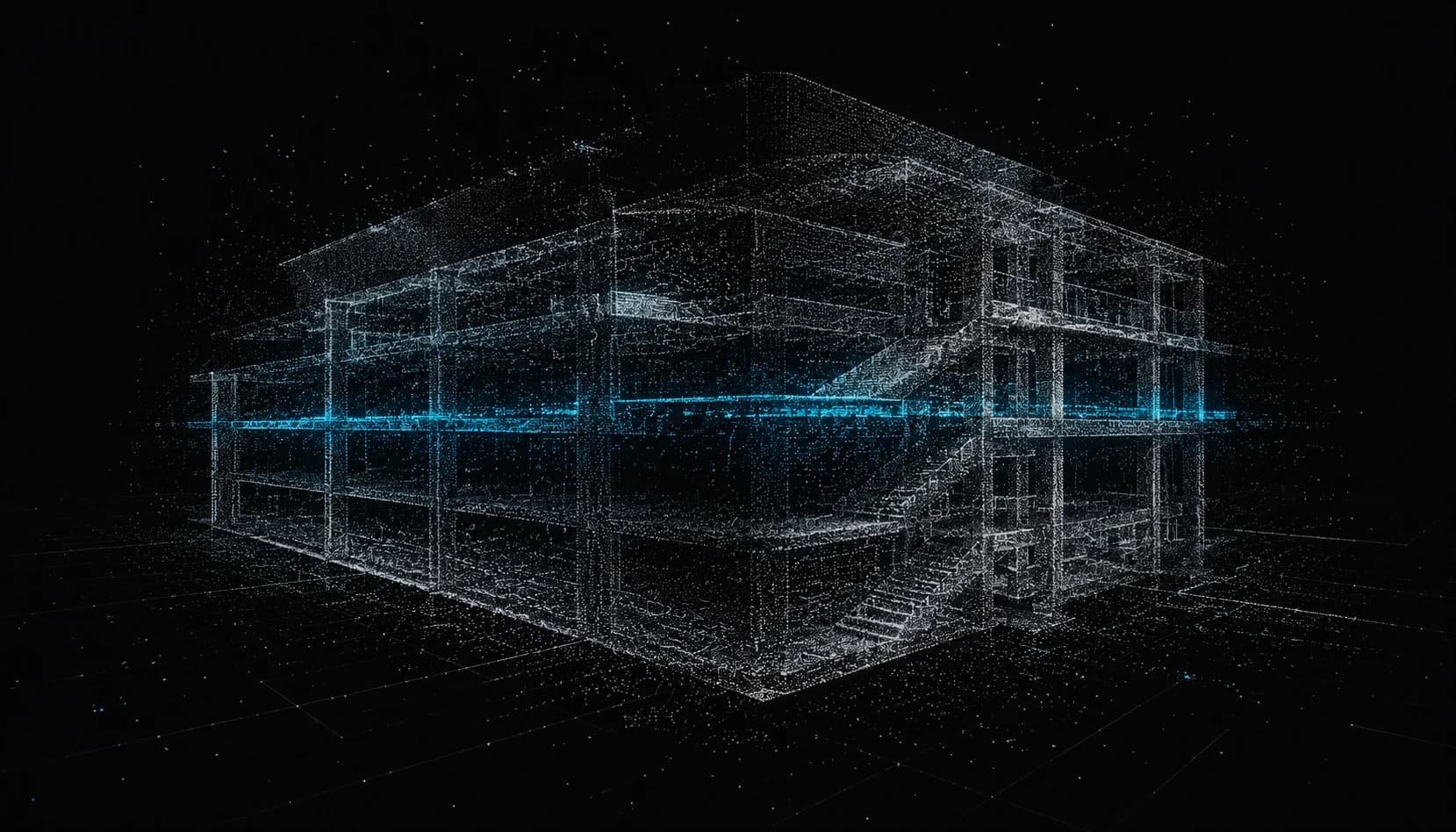
Each grid plane establishes a localized frequency perception layer, collectively enveloping interior and exterior spaces without line-of-sight dependency. Vertical mapping principles isolate each floor layer while maintaining synchronization integrity with adjacent grid planes above and below, ensuring accurate Z-axis separation without perceptual bleed-through.
Once activated, multiple grid planes federate into the higher-order frequency mesh topology, transforming local grids into a continuous three-dimensional perception lattice extending throughout the estate.
Mesh Federation & Synchronization
After grid deployment, anchors engage continuous frequency synchronization behaviors. Through peer-to-peer signaling exchange, each node maintains shared phase alignment with neighboring anchors, enabling collective perception coherence without command-center mediation or centralized signal arbitration.
The INPSN mesh operates as:
- A distributed cognitive network, rather than a conventional wireless data network
- A self-verifying perception field, wherein received distortions are correlated across multiple independent nodes
- A multi-path resilient topology, ensuring continuity of perception even during partial field degradation, architectural modifications, or localized interference conditions
Synchronization logic ensures spatial interpretation does not depend on any single anchor’s reception fidelity. Instead, motion reconstruction accuracy increases through anchor overlap zones that cooperatively validate occlusion geometries and vector trajectory estimations.
Mesh federation allows perception density to scale organically with estate complexity, enabling seamless extension across connected buildings, open plazas, transport corridors, and vertical separations without loss of continuity.
Passive Geometry Triangulation
INPSN does not detect occupants or objects as visual targets. Instead, spatial geometry emerges through analysis of frequency distortion patterns arising from natural signal obstruction events within the mesh environment.
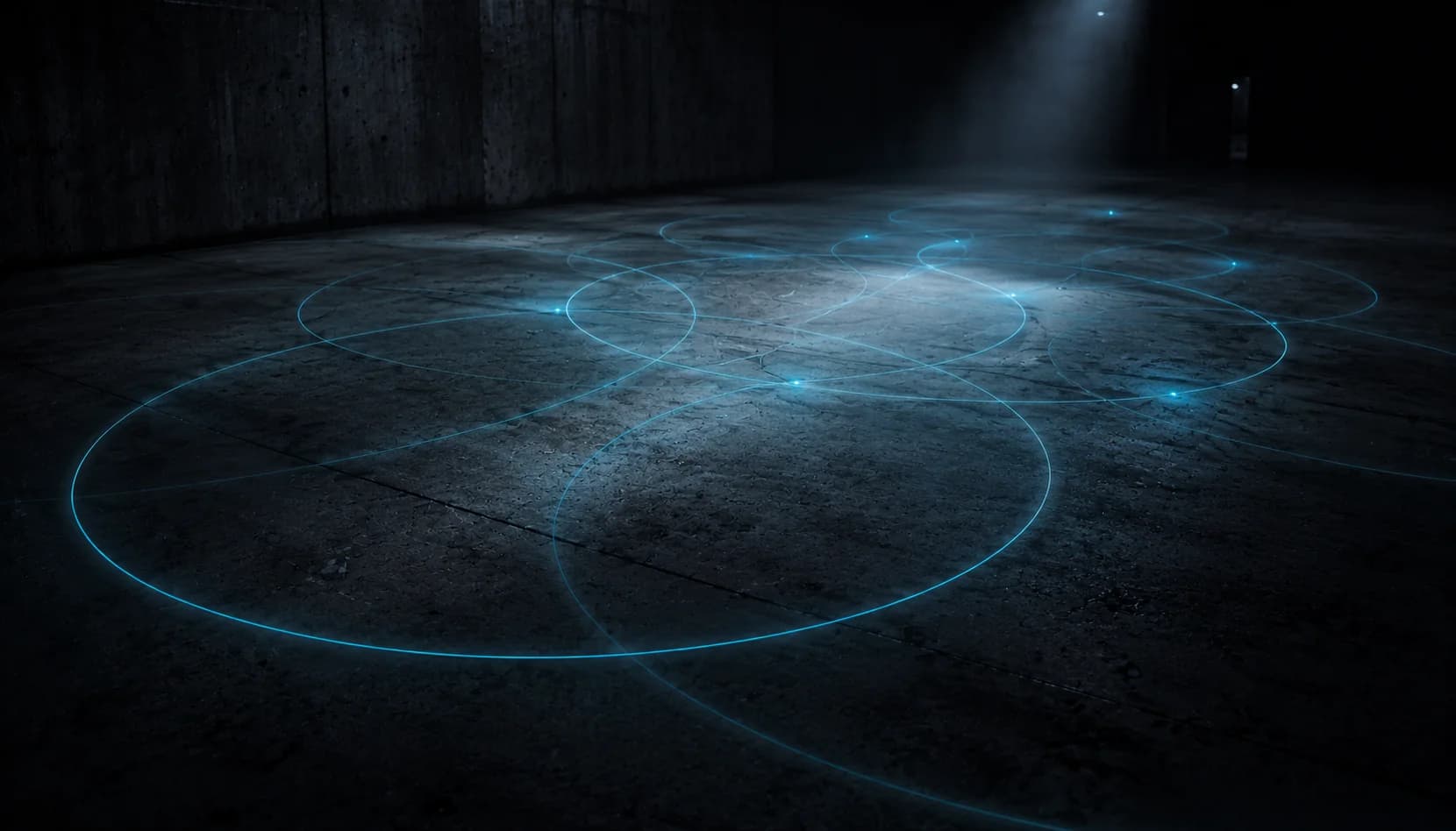
Ultra-wideband micro-bursts propagate through volumetric space. When bodies, moving groups, or physical objects enter that space, the travel behaviors of these pulses alter. Diffraction, scattering, attenuation, and reflection modify arrival intervals across receiving anchors.
The cognitive inference pipeline operated by MYTHIC correlates these distortion differentials across multiple intersecting grid planes, continuously estimating:
- Movement direction vectors
- Postural change dynamics
- Group clustering and dispersion patterns
- Stationary anomaly signatures
- Crowd compression geometries
Reconstruction does not depend on optical recognition or biometric sampling. Instead, three-dimensional motion geometries are synthesized as abstract spatial outlines derived solely from volumetric distortion relationships within the mesh field.
These motion forms populate the digital twin visualization as synthetic geometries rather than identifiable images, ensuring privacy preservation while maintaining operational utility.
Micro-Burst Perception Propagation
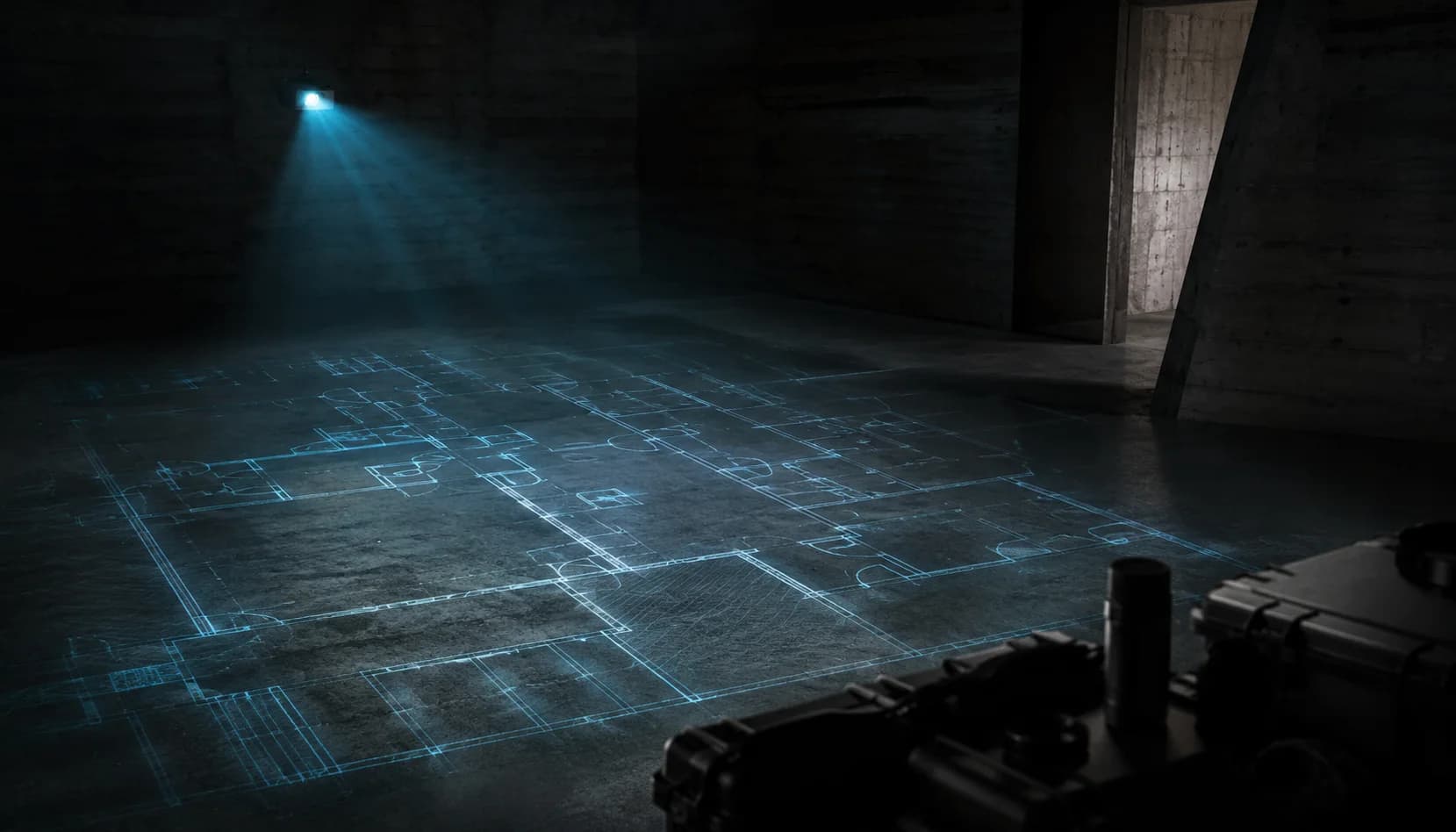
The perception field of INPSN is sustained by the emission of ultra-short duration UWB pulses, engineered carefully within duty-cycle safety envelopes and non-ionizing public RF exposure compliance thresholds.
Unlike sustained transmission systems, INPSN utilizes brief pulses rather than continuous broadcasts. These pulses propagate freely through architectural environments, interacting with materials and structural surfaces before dispersing harmlessly. The system does not rely on reception of encoded data payloads but instead observes wave behavior deviations caused by physical obstructions or spatial perturbations.
Interpretation focuses solely on propagation anomalies, not content transmission, allowing spatial mapping without signal intensity escalation or invasive scanning techniques.
The collective result is the formation of a dynamic volumetric sensing field that reveals motion geometry without imposing energy concentration risks or privacy compromise.
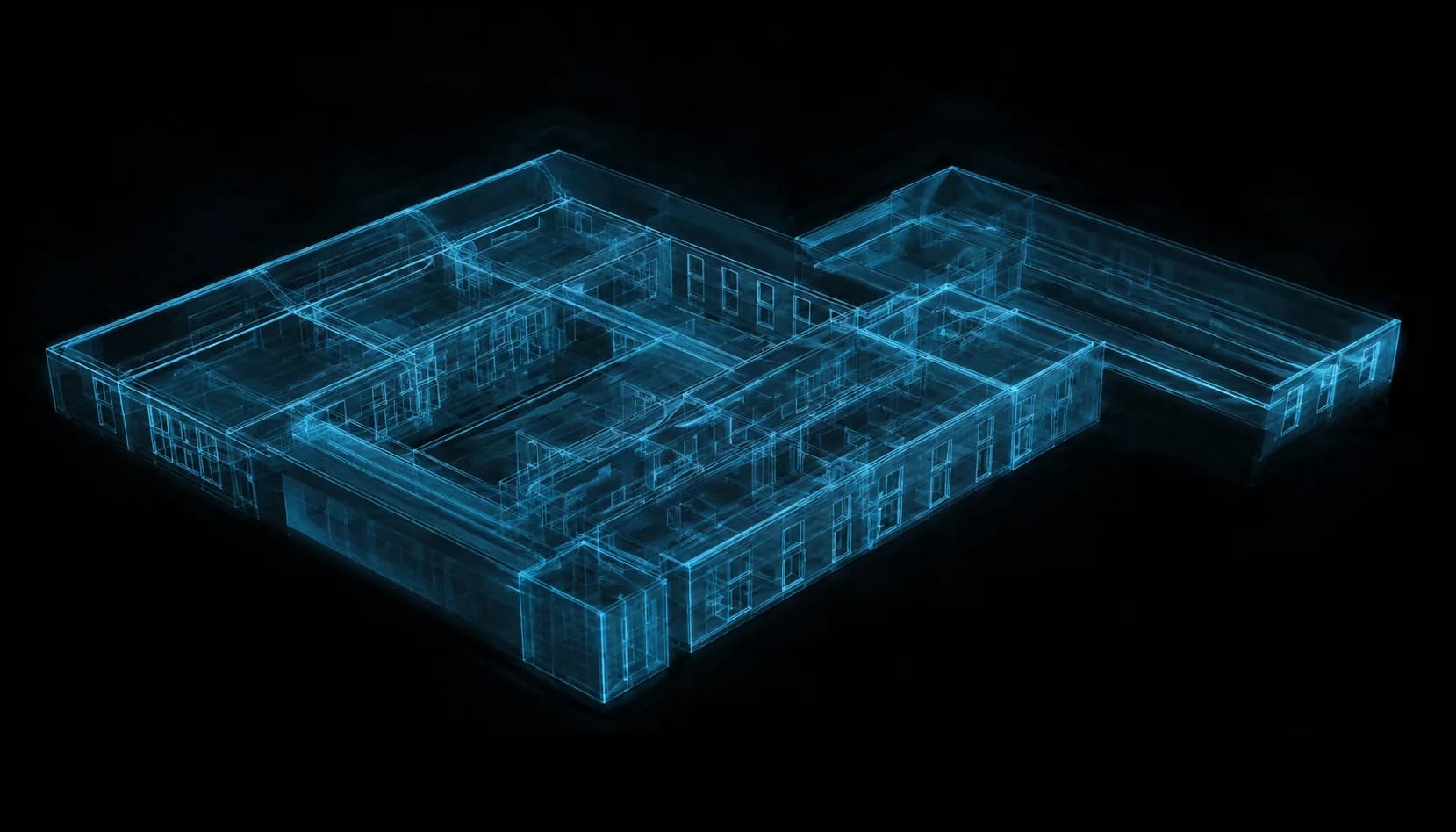
Occlusion & Distortion Mapping
As moving entities traverse the mesh field, their interference with pulse propagation generates identifiable distortion signatures. These distortion geometries are interpreted by MYTHIC into layered operational metrics including:
- Trajectory vectors
- Density concentration gradients
- Stationary stagnation clusters
- Sudden crowd flow irregularities
- Environmental disturbance indicators
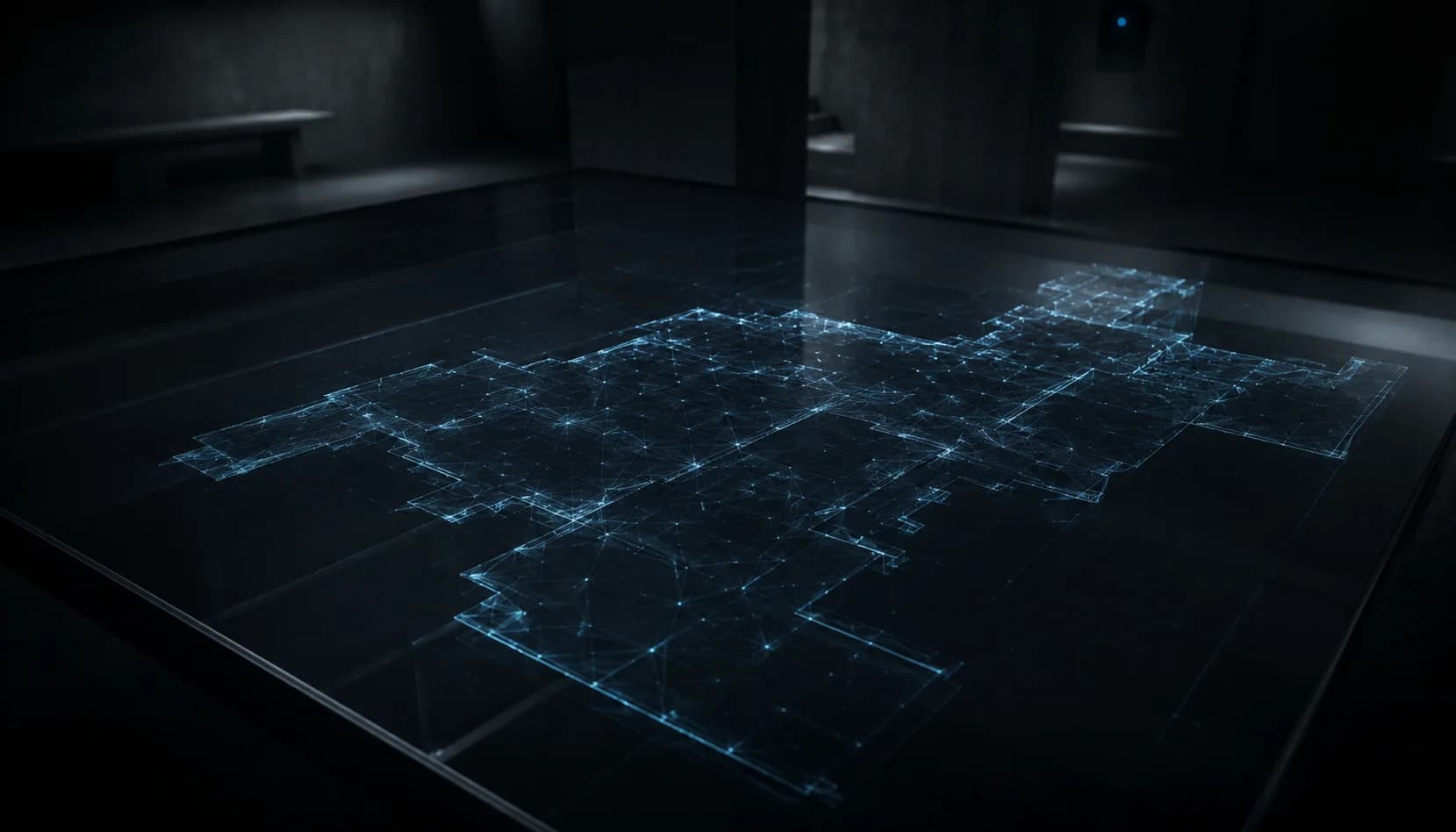
Frequency anomaly intensities are visualized through non-biological overlays often referred to as infra-style maps, not thermal imaging, but spectral anomaly field projections representing areas of spatial instability.
These overlays allow command authorities to recognize emerging hazards, congestion zones, and unusual conditions long before visible manifestations escalate into safety incidents.
Estate-Scale Perception Synthesis
Grid planes across interior and exterior spaces synchronize into a total-estate sensing lattice, producing a continuous spatial cognition field spanning entire operational territories.
Vertical transitions between stairwells, elevators, mezzanines, atriums, and connecting bridges integrate seamlessly within the volumetric mesh without Z-axis ambiguity. Each floor remains spatially isolated for precision reconstruction even as holistic visualization permits full-estate situational assessment.
For multi-property campuses and extended development zones, federation protocols allow separate meshes to operate as unified perception networks under the authority of centralized command via the NeuraLoop Intelligence Interface.
This enables INPSN to treat distributed properties not as isolated structures but as interconnected security ecosystems operating within a single perception domain.
NDA-PROTECTED MESH PARAMETERS
To prevent infrastructure mapping, reverse engineering attempts, or hostile exploitation of perceptual methodologies, the following operational parameters are intentionally excluded from public doctrine and remain reserved for NDA-secured engineering briefings only:
- Actual lattice spacing ratios
- Anchor density benchmarks per unit volume or area
- Synchronization timing intervals
- Differential triangulation tolerances
- Failure rerouting and degradation recovery protocols
- Cross-campus relay authentication behaviors
Public documentation defines architectural principles and safety doctrine only.
All precision engineering variables remain institutionally protected under NDA governance.
This page describes system doctrine, operational intent, and safety governance. Technical parameters, implementation details, and operational thresholds are restricted and disclosed only under contractual NDA.