REDUNDANCY & RELIABILITY DOCTRINE

INPSN is engineered as a reliability-first safety infrastructure, designed to remain operational, stable, and cognitively coherent even under architectural complexity, environmental fluctuation, network variation, or high-density movement across the estate. The redundancy architecture ensures that perception, cognition, and command continuity remain intact at all times, reflecting the operational expectations placed on enterprise estates, public-footfall environments, aviation hubs, defence-adjacent facilities, and high-value private properties.
To sustain this level of operational resilience, INPSN employs a multi-layer continuity strategy developed around four foundational principles: grid stability, signal integrity, cognitive continuity, and sovereign client control. Each principle reinforces the next, forming a reliability chain that prevents system degradation and maintains institutional-grade confidence across all deployment conditions.

Distributed Mesh Stability Across Architectural Complexity
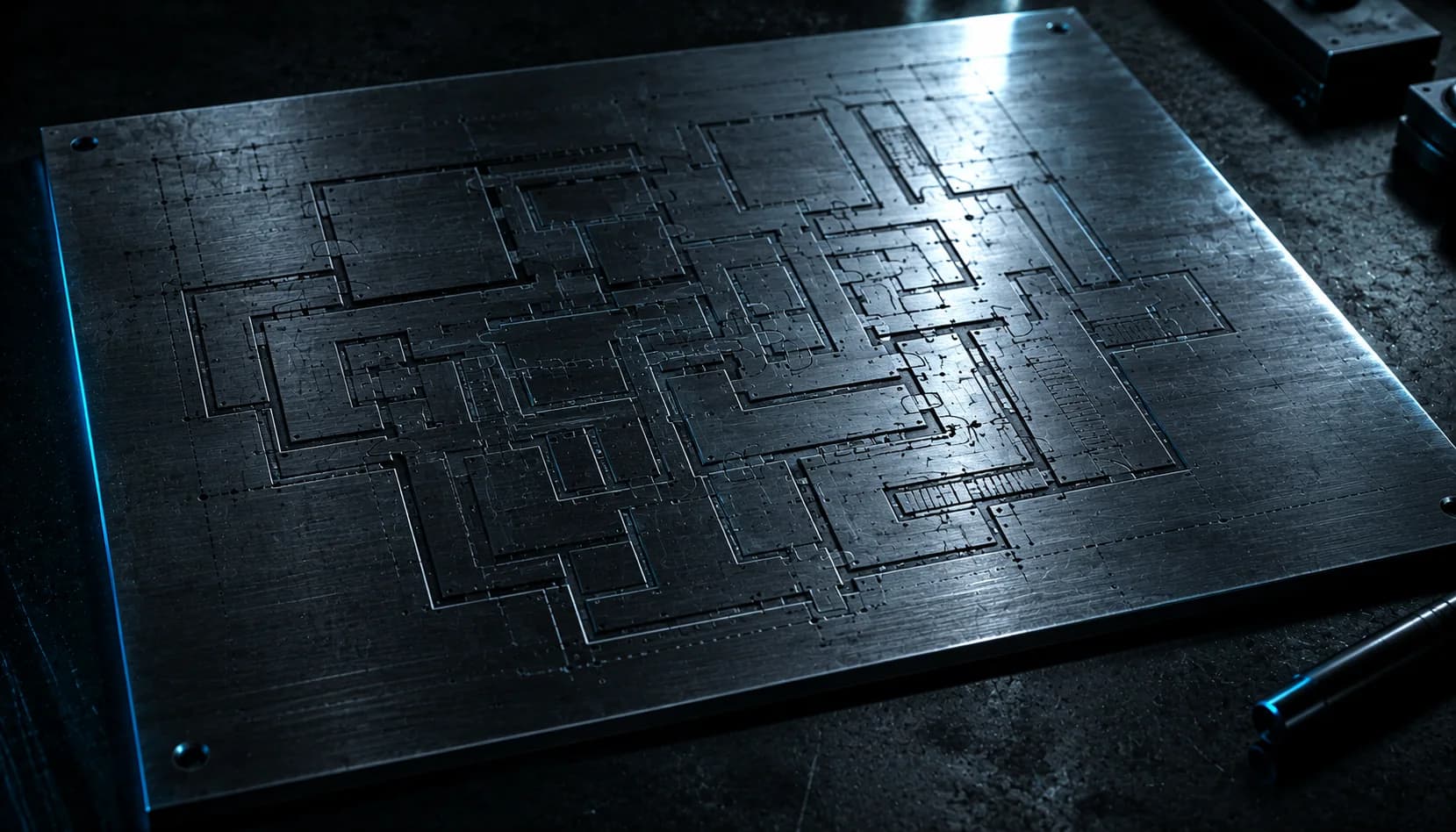
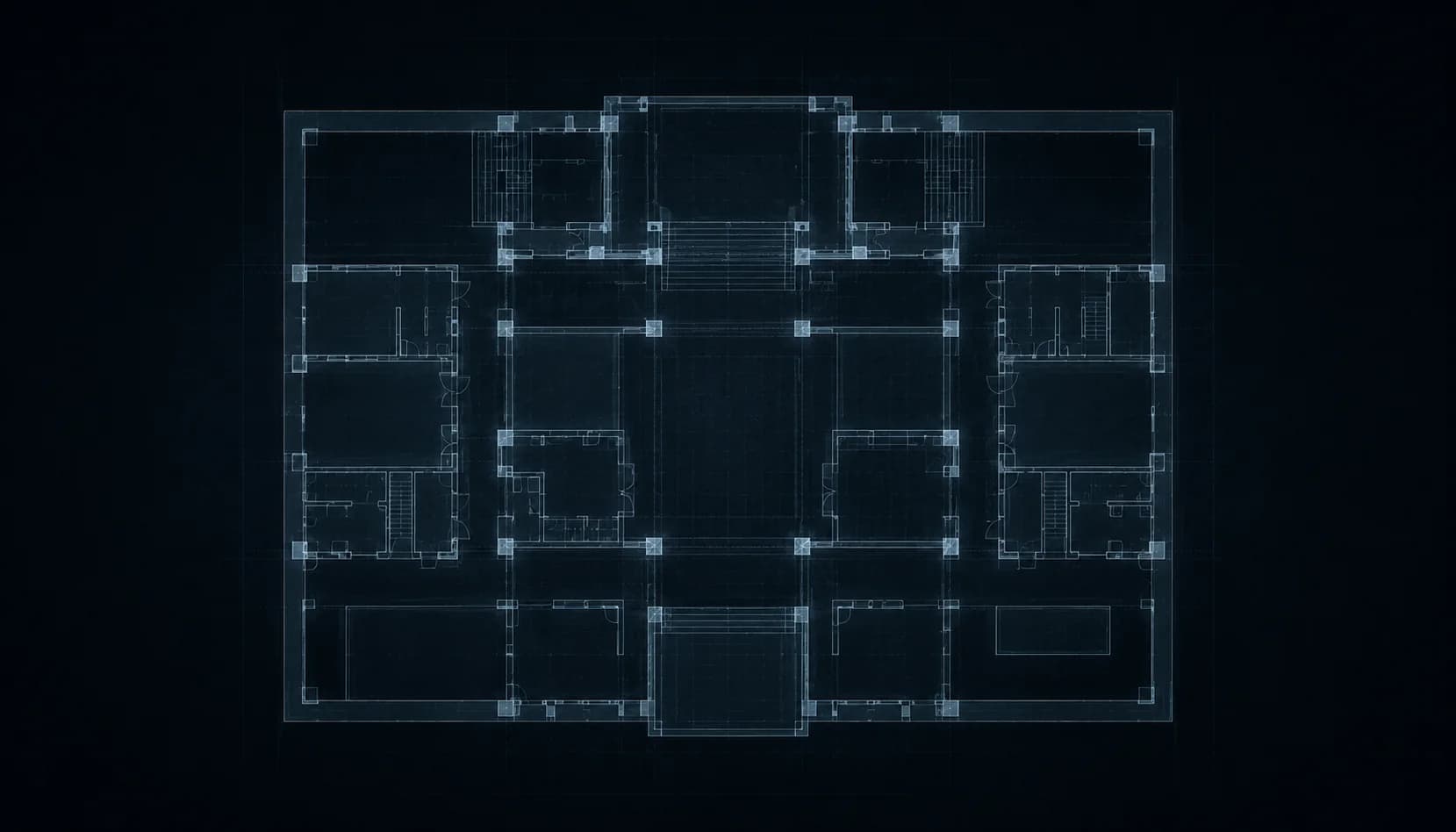
Every INPSN deployment is constructed as a distributed, self-sustaining UWB mesh, calibrated per floor and per spatial zone based on architectural geometry, footfall patterns, and operational priorities. Each floor maintains its own autonomous grid, ensuring that multi-level estates preserve uninterrupted perception even if one region experiences local interference or high-density movement.
Cross-floor orchestration occurs at the computational layer rather than the signal layer, ensuring that no anchor depends on another floor’s hardware to maintain spatial coherence.
If one anchor becomes temporarily unavailable, neighbouring anchors absorb its spatial coverage using triangulation continuity methods, ensuring uninterrupted perception across corridors, stairwells, lift zones, and open atriums.
This architecture guarantees positional stability, behavioural clarity, and perception continuity even under environmental fluctuation, structural shielding, metallic interference pockets, or temporary obstructions.
Environmental Noise Normalization & Signal Integrity Safeguards
In dynamic real-world environments, UWB signals coexist with varied RF activity. INPSN therefore employs environmental noise-normalization layers that stabilise micro-burst interpretations without altering emission characteristics or compromising compliance.
These safeguards operate at the interpretation layer, where micro-burst distortions are conditioned, normalized, and verified prior to reconstruction. This protects the fidelity of posture detection, trajectory recognition, anomaly emergence, and crowd pattern evolution, even in:
- high-metal infrastructure
- industrial machinery zones
- dense commercial RF environments
- large glass-reflective structures
By preventing distortion-based misinterpretation, INPSN maintains clean cognitive perception across all operational conditions, without modifying the lawful emission characteristics of UWB hardware.
Edge Computing for Low-Latency Operational Continuity
For enterprise and institutional deployments requiring elevated continuity standards, INPSN supports edge-compute acceleration that processes frequency-deformation data closer to the environment itself.
This reduces round-trip latency, strengthens live reconstruction responsiveness, and ensures that temporal relationships between events, behaviours, and micro-movements remain exceptionally precise, critical for escalations, crowd operational review, and rapid incident coordination.
Edge processing also enhances system resilience during:
- network congestion,
- partial connectivity loss,
- temporary cloud-route interruptions, or
- high-density event loads.
All operations remain client-sovereign: edge compute is designed so that it does not alter governance rights or access privileges. It simply ensures that INPSN continues delivering consistent, high-fidelity behavioural intelligence with operational immediacy.
Edge-AI Support for Cognitive Stability Under High Activity
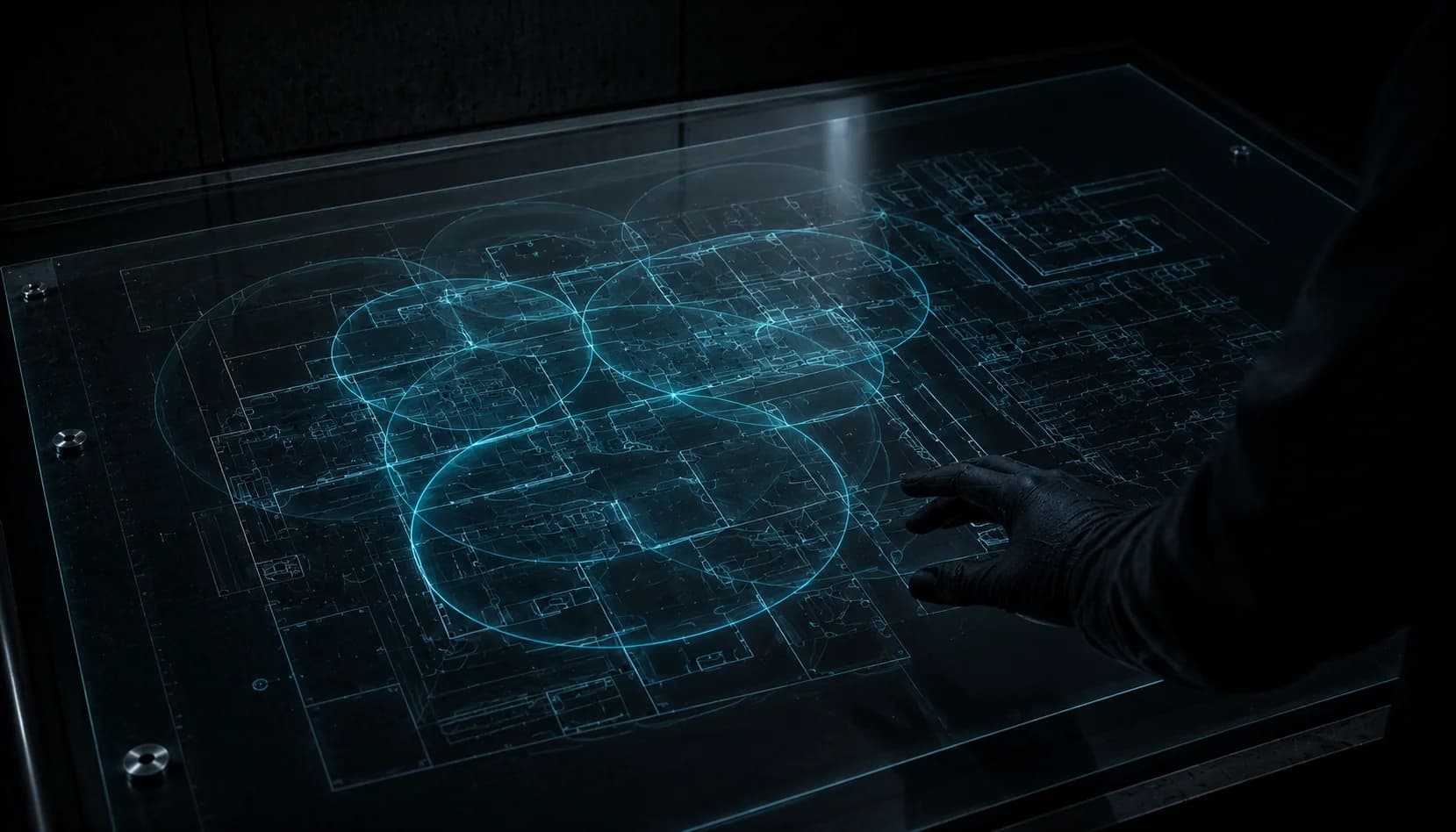
Where clients opt for elevated cognitive infrastructure, INPSN extends Edge-AI reinforcement to support MYTHIC’s behavioural interpretation during periods of extreme motion density or simultaneous anomaly emergence.
Edge-AI performs:
- preliminary feature-organization
- trajectory coherence checks
- congestion-pattern normalization
- multi-person interaction smoothing
before intelligence enters the central MYTHIC cognition stream.
This architecture ensures that MYTHIC receives clean, structured behavioural inputs, even during peak activity, protecting the stability of early-risk advisories, escalation timelines, and operational recommendations.
All cognition hierarchy remains unchanged: MYTHIC makes decisions; Edge-AI only preserves clarity under load.
BLE Continuity Layer as a Passive Fallback Channel
If a localized power fluctuation or anchor degradation momentarily interrupts UWB perception, the system activates the BLE continuity layer, maintaining essential positional continuity for guard entities and key operational markers.
BLE does not replace UWB nor contribute to full-fidelity reconstruction; it simply ensures continuity of:
- guard presence
- directional movement
- coarse positional flow
until UWB perception stabilises again. This prevents temporal gaps in operational oversight and preserves audit continuity across the event timeline.

Power Resilience Architecture (Hybrid Battery, UPS, Portable INPSN)
INPSN maintains continuity across multiple on-ground power conditions:
Hybrid Battery Subsystems
Anchors can operate on internal backup batteries, maintaining perception during site-level power transitions or minor outages.
UPS/Generator Integration
For critical sites, INPSN aligns with the estate’s UPS or generator systems, ensuring micro-burst orchestration remains uninterrupted during extended power events.
Portable INPSN (Field Variant)
For mobile, temporary, or remote deployments, Portable INPSN operates as a fully contained UWB unit with:
- hot-swappable protected batteries
- noise-normalized micro-burst sensing
- self-contained edge processing
ensuring uninterrupted spatial intelligence even outside fixed infrastructure environments.

Anti-Spoofing, Anti-Cloning & RF Integrity Protection
The perception architecture is safeguarded against unauthorized replication, manipulation, or redirection. INPSN employs layered protective measures that validate:
- micro-burst timing integrity
- anchor-ID authenticity
- reconstruction coherence
- environmental signature plausibility
These verification layers prevent:
- signal spoofing
- cloned pulse injection
- replay attempts
- RF manipulation designed to create false activity patterns
While the technical specifics remain proprietary, the principle is clear: Perception cannot be falsified, cloned, or artificially induced without failing internal verification checks.
This protects the estate from both malicious tampering and inadvertent distortive phenomena.
Tamper Detection, Device Health & Autonomous Recalibration
INPSN maintains continuity across multiple on-ground power conditions:
Hybrid Battery Subsystems
Anchors can operate on internal backup batteries, maintaining perception during site-level power transitions or minor outages.
UPS/Generator Integration
For critical sites, INPSN aligns with the estate’s UPS or generator systems, ensuring micro-burst orchestration remains uninterrupted during extended power events.
Portable INPSN (Field Variant)
For mobile, temporary, or remote deployments, Portable INPSN operates as a fully contained UWB unit with:
- hot-swappable protected batteries
- noise-normalized micro-burst sensing
- self-contained edge processing
ensuring uninterrupted spatial intelligence even outside fixed infrastructure environments.
Sovereign Client Control & Data Residency Assurance
No external entity, including NeuraLoop, can view, extract, or manipulate operational data unless the client explicitly authorizes access.
Data remains fully under the client’s jurisdiction:
- all perception data is stored locally or within client-controlled infrastructure
- MYTHIC’s interpretive outputs remain locally governed
- command privileges cannot be escalated without owner approval
This sovereignty protects the estate from third-party access, unauthorized operational oversight, and data exfiltration risks, reinforcing INPSN’s position as a client-dominated operational intelligence system.
NDA-Restricted Engineering Detail
Certain internal reliability mechanisms, such as micro-burst arbitration logic, anchor health analytics, temporal reconstruction safeguards, anti-spoofing heuristics, mesh arbitration structures, and edge-AI coordination pathways, are disclosed only under NDA to qualified institutional or enterprise evaluators.
These disclosures provide the necessary due-diligence transparency while protecting INPSN’s proprietary spatial-cognition foundation and operational defence posture.
This page describes system doctrine, operational intent, and safety governance. Technical parameters, implementation details, and operational thresholds are restricted and disclosed only under contractual NDA.