DEFAULT MODE: NON-SURVEILLANCE BY DEFAULT
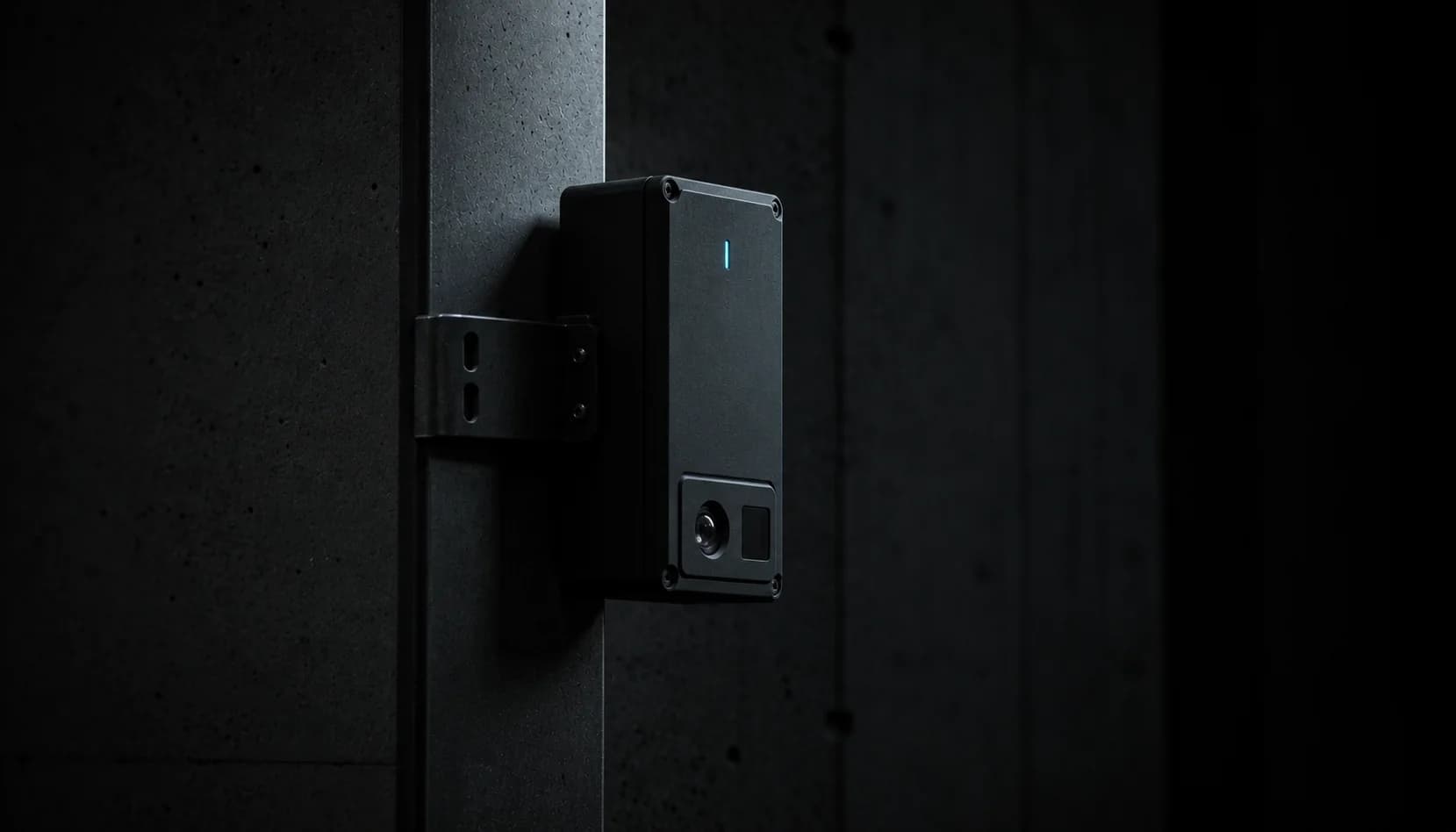
SIGNET is architected to exist in a non-surveillance default state, where visual intelligence capability remains dormant unless explicitly and lawfully activated. The system does not engage in continuous corroboration, open-ended recording, or identity-oriented operational review by default.
SIGNET is intentionally designed with a default operational posture of restraint rather than corroboration. Upon deployment, the system does not function as an active visual operational review utility, nor does it initiate continuous recording, automated viewing, or persistent visual interpretation of environments or occupants. Visual intelligence exists solely as a governed capability held in reserve, not as an always-operational behavior.
In its default configuration, SIGNET maintains a state of availability without activation. Optical instruments, where present within protected environments, do not participate in intelligence processing, contextual correlation, or evidentiary generation unless and until an explicit authorization event occurs. The presence of optical infrastructure alone does not constitute surveillance activity, nor does it imply ongoing visual interpretation.
This default state ensures that SIGNET does not observe environments in an open-ended or exploratory manner. No continuous visual streams are interpreted, no footage is persistently analyzed, and no visual data is elevated into intelligence workflows. The system does not follow individuals, does not maintain visual continuity across spaces, and does not perform any form of identity recognition or personal profiling.
Crucially, the default operational logic of SIGNET is state-aware rather than subject-focused. Where visual intelligence may later be permitted under governance, its interpretive scope is constrained to environmental context, spatial conditions, and event confirmation. This design separation is enforced from the outset to ensure that visual capability cannot drift into person-centric corroboration through operator habit, convenience, or system inertia.
SIGNET’s default mode is also designed to preserve the doctrinal integrity of INPSN. INPSN continues to operate as a visual-free, privacy-preserving spatial intelligence system, and the deployment of SIGNET does not modify, influence, or augment INPSN’s sensing behavior in any way unless explicitly authorized. The coexistence of the two systems does not create a blended or hybrid perception state by default.
Importantly, non-surveillance by default is not a policy applied after deployment, it is a behavioral constraint embedded into system design. The system cannot silently escalate into corroboration, recording, or interpretation without passing through defined governance pathways. Any transition away from the default state requires deliberate, logged, and reversible authorization, which is addressed in subsequent sections.
Through this default posture, SIGNET establishes a clear institutional distinction between capability and conduct. While the system may be capable of visual intelligence, it does not exercise that capability absent lawful purpose, explicit authorization, and defined operational boundaries.
This approach ensures that SIGNET aligns from day one with regulatory expectations of proportionality, privacy-by-design principles, and long-term institutional trust. Visual intelligence begins not as an active presence, but as a silent, governed potential, activated only when justified.
By default, SIGNET does not perform visual intelligence operations and cannot activate optical interpretation without explicit human authorization exercised through governed control pathways.
In practical terms, the default state ensures that where authorization is absent, visual intelligence is absent, not merely reduced, obscured, or informally limited.
“The conditions, permissions, and control pathways under which visual intelligence may be activated are governed under authorization-gated operating modes, defined explicitly in Section 3.4. No automatic escalation occurs from the default state.”
“SIGNET’s default mode ensures that restraint is the system’s baseline behavior, and corroboration is an exception that must be earned, governed, and accountable.”
This section describes system doctrine and governance boundaries. Technical parameters and implementation details are disclosed only under contractual NDA.